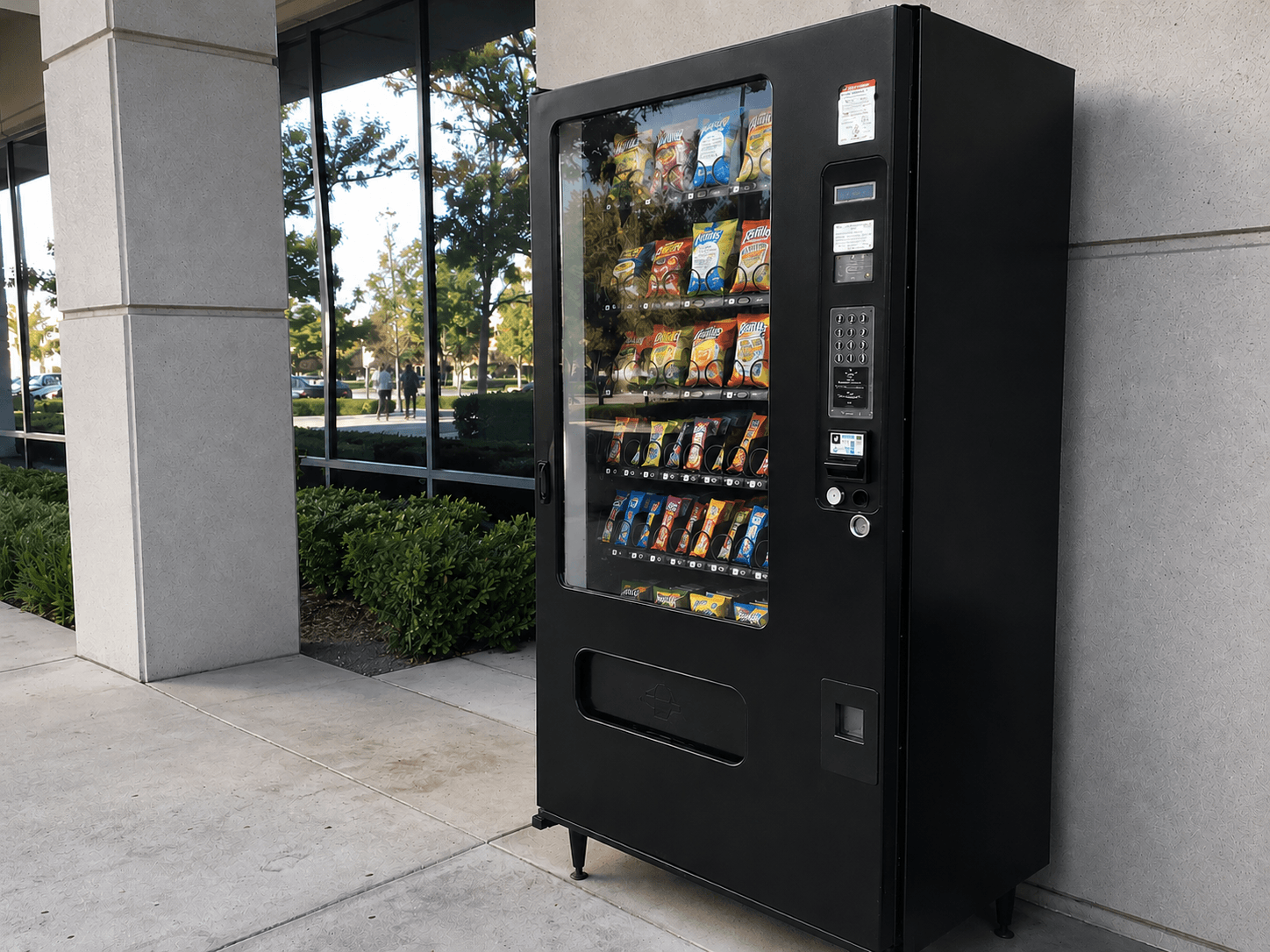
Offices and office parks are one of the best vending machine locations when the placement is strategic: a captive audience with a fixed schedule, easy access to a well-placed machine, few lunch-break alternatives, and money to spend on convenience. For vending operators and entrepreneurs evaluating vending machines in offices and office parks, the strongest sites usually share three traits: at least ~50 employees on-site, long or multi-shift hours, and limited walkable food options nearby. If a location hits all three, it’s worth pursuing; if not, remember not every location is a fit, and other locations may outperform an office with weak traffic or poor placement.
That’s the short version. Here’s what to check before placing machines, which machine types and product offerings fit office buildings, large offices, smaller offices, and corporate campuses, what kind of revenue benchmarks to expect, how can vending machines support convenience and employee satisfaction in modern offices, and how to pitch the business owner, office manager, or property manager who controls the space so the location works for both the account and your vending business.
Why Office Buildings Work as a Vending Location
Not every office is worth placing in. Corporate headquarters, coworking spaces, and business parks vary a lot in foot traffic and demand, so before you sign anything, run the location through three qualifying signals.
Headcount: ~50+ Employees On-Site
This is the first filter, and it’s non-negotiable. A machine in a 15-person satellite office will bleed money no matter how good the product mix is. As a rule of thumb, look for 50 or more employees physically on-site during a typical shift — not headcount on paper, not remote-inclusive totals. Buildings with over 300 employees are especially attractive targets because the high volume usually supports stronger placements or multiple machines. Hybrid schedules matter here: a company with 80 employees but only 30 in the building on any given day behaves like a 30-person location.
If you can, ask about badge-in counts or parking lot occupancy before committing. It’s a better predictor than the number on the company’s website.
Long Hours or Multi-Shift Operations
Offices that run one shift, 9-to-5, with an hour lunch break outside the building are mediocre vending locations — employees have time to leave and often do. The better targets are:
- Call centers and support operations with rotating or extended shifts
- Manufacturing-adjacent office/admin buildings with early starts
- Facilities running two shifts (day and evening) in the same building
- Offices with a “heads down” culture where people eat at their desks
Vending also works especially well for employees on non-traditional hours because machines operate continuously with 24/7 access to refreshments. To ensure machines stay available during peak breaks and shift changes, match the restocking schedule to demand and use durable equipment.
More hours in the building means more vending transactions per employee, not just more employees.
Limited Nearby Food and Beverage Options
This is the signal operators skip most often, and it’s usually the difference between a break room machine that pays for itself and one that doesn’t. Office parks on the edge of town, in industrial corridors, or in suburban business districts with no walkable retail are strong candidates precisely because employees have nowhere else to go. Downtown high-rises surrounded by cafes, food trucks, and delis are a harder sell — you’re competing with a five-minute walk to better options.
Do a quick radius check: if there’s no coffee shop, convenience store, or quick-service restaurant within a five-to-ten-minute walk, and the building also has consistent foot traffic, the location has built-in demand. Those are often the right locations — and in many cases the best locations — for office vending when employees have limited nearby alternatives and easy access to the machine matters.
Product Mix and Machine Type: What Actually Sells in an Office
Office vending has a different buying pattern than other location types, and your machine selection, planogram, and product offerings should reflect that. Traditional snack and beverage machines are still the foundation of most office setups, and a dependable vending service helps keep them stocked and relevant. They’re also a cost-effective breakroom solution that can make the break room more useful as a shared amenity space.
Coffee Machines
Office break rooms run on caffeine. A standalone coffee machine — bean-to-cup or capsule-style — is one of the highest-performing single-category additions you can make to an office account, especially in buildings without an in-house barista setup or a paid coffee service. Pair it with a snack or snack+drink combo machine rather than relying on coffee alone.
Healthier Snack Options for the Break Room
Office populations skew toward employees who are budget-conscious but also health-conscious during the workday, and modern machines can be customized with healthy snacks and other healthy options for office employees — protein bars, nuts, baked chips, and lower-sugar options consistently outperform pure candy-and-soda planograms in this setting. That doesn’t mean cutting traditional snacks entirely; it means allocating meaningful shelf space (a third to half, depending on the account) to better-for-you SKUs, with a mix that also covers varied dietary preferences, and watching sales data to adjust.
Combo (Snack + Drink) Machines
For most single-machine office placements, a combo unit beats running separate snack and drink machines — it maximizes the value of the footprint you’re given (break rooms are rarely large), works especially well in smaller offices, and covers both a quick snack occasion and coffee or hunger-driven purchases in one decision.
VendSoft’s live sales report:
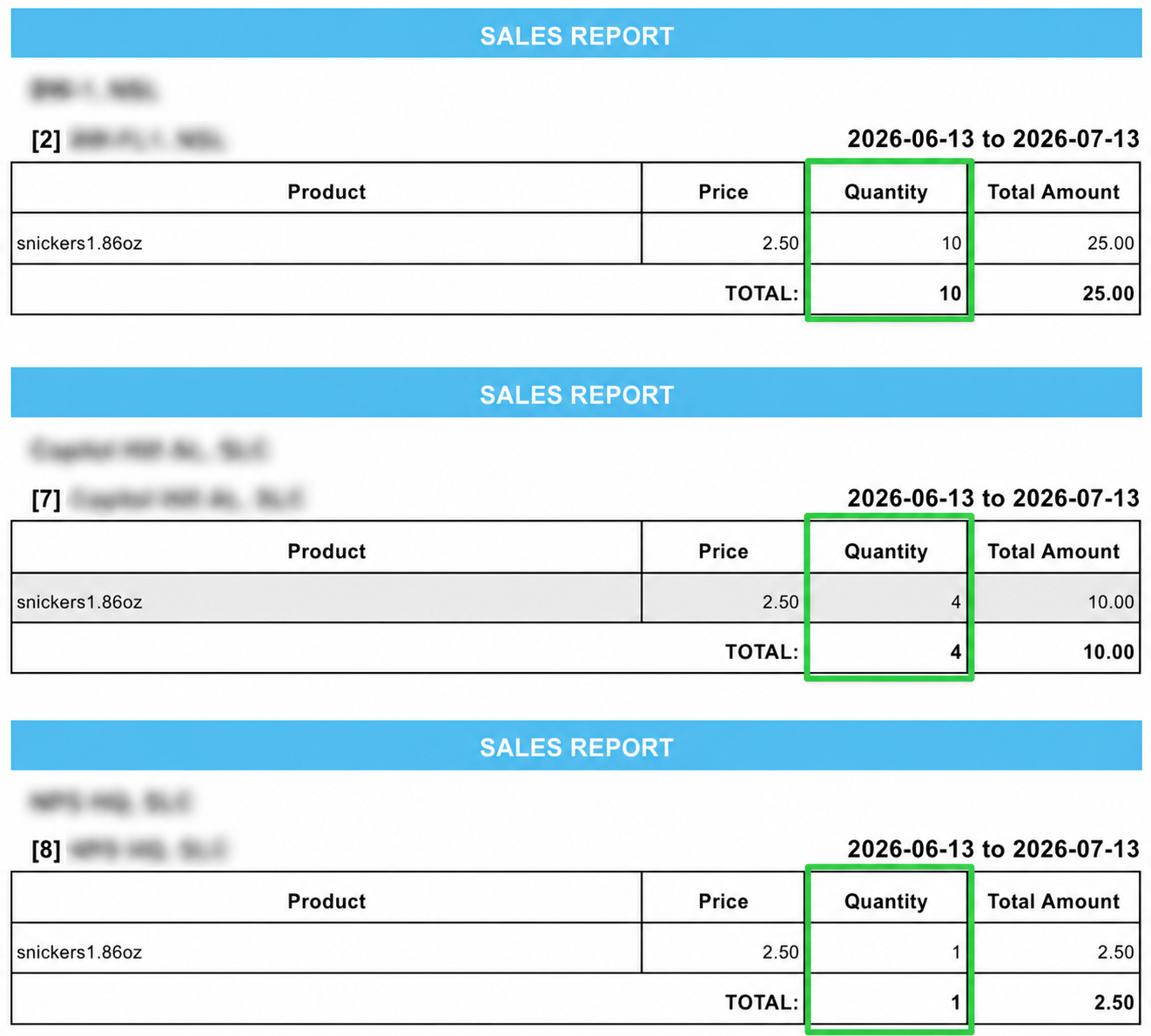
See how the same product performs across different locations in VendSoft — so you know what’s worth stocking at each location instead of guessing. Start your free 14-day trial (no payment info required!)
How Vending Machines Differ From Other Location Types
Product strategy isn’t one-size-fits-all, and it’s worth knowing why office mixes look different from other verticals you might also service:
- Gyms skew heavily toward protein bars, protein shakes, and sports drinks — health-focused, but performance-oriented rather than convenience-oriented.
- Schools skew toward affordable, compliant snacks within tighter price points and (often) nutritional guidelines, with less room for premium SKUs.
- Offices sit in between: price sensitivity is lower than schools, but the buyer wants perceived value and some healthier choices, not just performance nutrition.
If you’re running routes across multiple location types, don’t copy-paste a planogram from one to another — it’s a common reason otherwise-good locations underperform.
How to Pitch Office and Facilities Managers
Pitching an office account is a different conversation than pitching a school or a gym, and treating it the same way is a common reason cold outreach falls flat.
Who You’re Actually Talking To
For a single office building, your decision-maker is usually the office manager or facilities manager — the person responsible for keeping the space running and employees reasonably happy, not the CEO. For a multi-tenant office park, it’s typically the property manager or leasing office, who cares about the amenity across all tenants, not just one company’s employee experience. In some office buildings and office parks, you may also need approval from the property owner or the property management company rather than only an on-site manager.
Know which one you’re calling before you pitch. A property manager for a business park will ask about tenant-wide rollout and liability; a single-company office manager will ask about employee feedback and break room space. Your pitch should also change depending on whether you’re speaking with a business owner at a standalone office site, since their priorities are often more focused on staff convenience and direct site impact.
What They Actually Care About
Facilities and office managers get pitched a lot of things. The ones that get approved quickly hit three points:
- Zero cost to them. No purchase, no lease payment, no upfront investment. You supply and maintain the machine; they supply the space and the electrical outlet, with free installation at no cost to the location.
- Amenity value. For a single company, it’s an employee perk that costs nothing and requires no HR involvement. For a property manager, it’s a tenant amenity they can list when marketing the building, and for landlords or owners it can also create passive income.
- No operational burden. They don’t want to manage inventory, handle cash, or field complaints. Modern machines accept contactless payments for convenience, while the vending operator handles restocking, servicing, and customer issues entirely.
For some placements, commissions are often in the 10–20% range when negotiating with property owners, though office arrangements can vary.
Framing the Revenue-Share Offer
Lead with the fact that there’s no cost and no work on their end, then offer a modest revenue share (commonly in the 5–10% range, adjusted for your margins and their traffic) to office managers or property owners as the closer, not the opener. If you are placing machines on someone else’s site, you need permission and a written agreement covering use of the private property. For an office manager, frame it as “a free break room upgrade with a little something back for the department.” For a property park manager, frame it as a tenant amenity with a small revenue line they can attribute to building operations.
Compare that to how you’d pitch a school (where the decision-maker is often an administrator focused on student wellness policy and PTA approval, not revenue) or a gym (where the owner may want a cut tied to member satisfaction scores or co-branding). Offices are the most straightforward of the three — the pitch is almost entirely about convenience and zero-hassle amenity value, with revenue share as a nice-to-have rather than the main draw, especially when strong machine placement and a reliable restocking schedule help justify the offer.
Where Office Vending Fits in Your Overall Route Strategy
Offices and office parks are one location type among several worth evaluating, but not every site is worth pursuing in the broader vending business, so the same criteria-first approach still matters — headcount, hours, competition, and the right product mix for the audience. That same framework also helps compare offices with other high traffic locations and other locations such as residential communities, fitness centers, healthcare environments, transportation hubs, manufacturing plants, and train stations. For a broader look at how office placements compare to schools, gyms, hospitals, and other high-traffic location types, see our full guide: Profitable Vending Machine Locations: 2026 Guide.
Qualifying a location is only half the job. Once a machine is placed, the real question is whether it’s actually performing — not just generating some revenue, but hitting the margins that make the account worth servicing. VendSoft’s per-location profit tracking shows you revenue and net margin by machine, and remote monitoring helps ensure machines stay stocked and working between service visits, so you can see which office accounts are worth expanding and which ones need a planogram change or a second look before you renew the contract.
Want more vending business tips?
Subscribe to our free 2-week email course and learn how to start a successful vending business.