Gyms and fitness centers work well for vending machines when they combine high daily visit volume with a captive, post-workout audience that’s already primed to buy — specifically water, protein, or a recovery snack. The catch is that not every gym qualifies: a facility’s traffic pattern matters more than its square footage, and a lot of small studios simply don’t move enough people through the door to support a machine. Here’s how to tell the difference, what to stock once you’ve placed one, and how to pitch a gym owner in a way that actually lands.
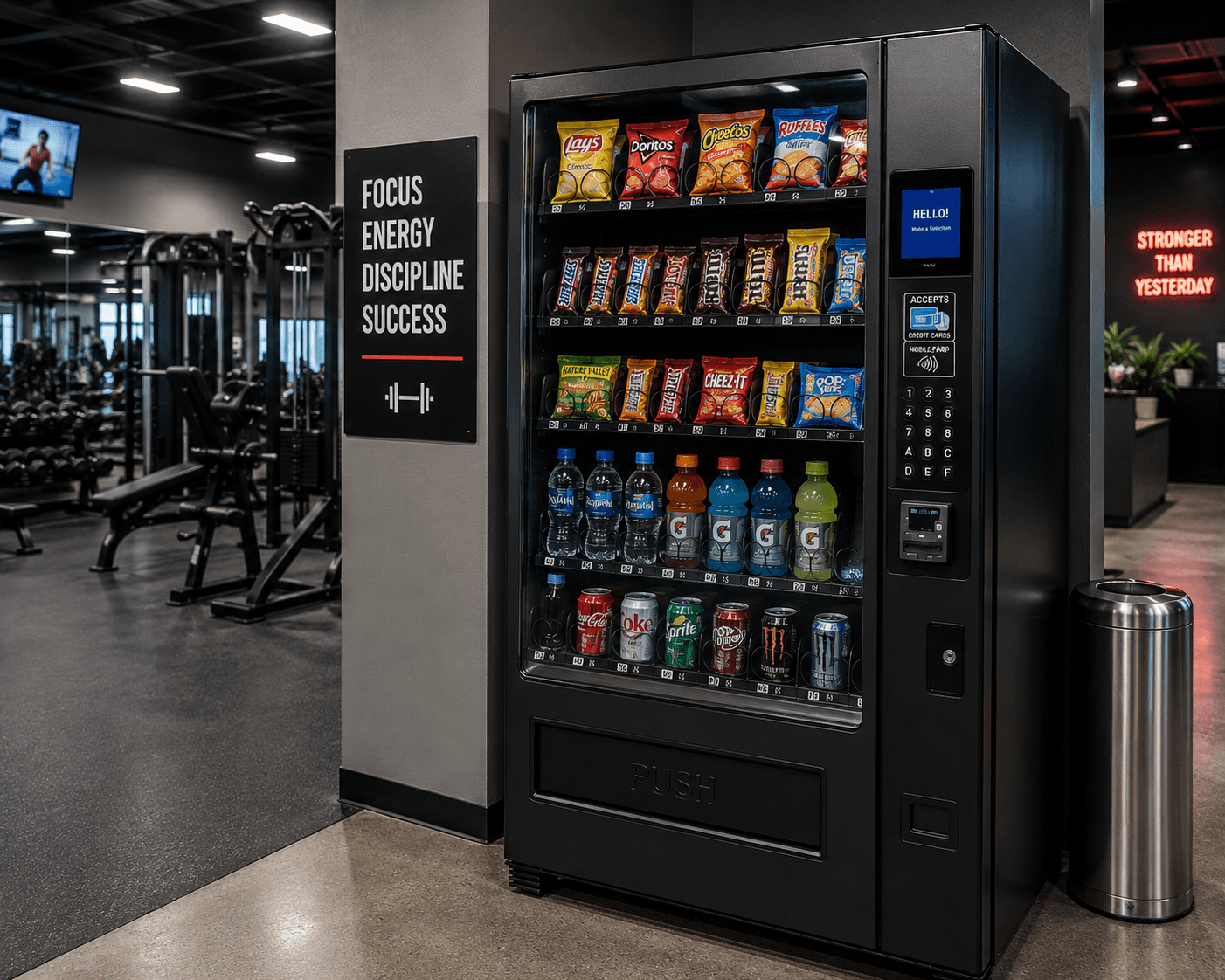
Why Gyms Work as a Location for Vending Machines — When They Do
Gyms aren’t automatically good vending locations just because people sweat there. What makes a gym worth placing in is a specific combination of traffic volume and purchase timing.
Membership size and daily visits. As a rule of thumb, you want a facility with enough active members to generate consistent daily foot traffic — think several hundred active members at minimum for a standalone location, or a member base large enough that even a modest daily-visit percentage clears 80–100 people through the door. A 24-Hour Fitness or Planet Fitness-style big-box gym, a mid-size CrossFit box with a strong member roster, or a multi-studio fitness chain location will usually clear that bar. A boutique yoga studio running six classes a day with 12 people each will not — the math just doesn’t support a machine, no matter how enthusiastic the members are about wellness products.
Peak-hour concentration. This is the biggest structural difference between gyms and offices as a location type. Offices give you steady, all-day grazing traffic — someone’s walking past the break room machine more or less continuously from 9 to 5. Gyms don’t work that way. Traffic is sharply concentrated into two or three windows: early morning (5–8 a.m.) before work, early evening (5–8 p.m.) after work, and weekend mornings. A gym that’s a ghost town at 2 p.m. can still be an excellent vending location if those three windows are consistently busy — you’re not selling on a flat curve, you’re selling in bursts, and the machine and stocking schedule need to account for that.
The post-workout impulse-purchase window is the real qualifying signal. This is the thing to look for above membership numbers or square footage. Someone who just finished a workout is dehydrated, often hasn’t eaten in a few hours, and is standing in the lobby deciding what to do next. That’s a much stronger purchase moment than someone walking past a breakroom machine mid-afternoon out of habit. If you can observe that lobby moment during a site visit — people lingering near the door, checking phones, clearly deciding on a next stop — that’s a better predictor of vending performance than any membership count the gym gives you.
Where gyms don’t qualify. Skip small boutique studios, single-class-format spaces (spin-only, barre-only), and anywhere with fewer than a couple hundred weekly visits. Also be cautious with gyms that have a strong on-site smoothie bar or café already — you may be walking into direct competition rather than an open opportunity.
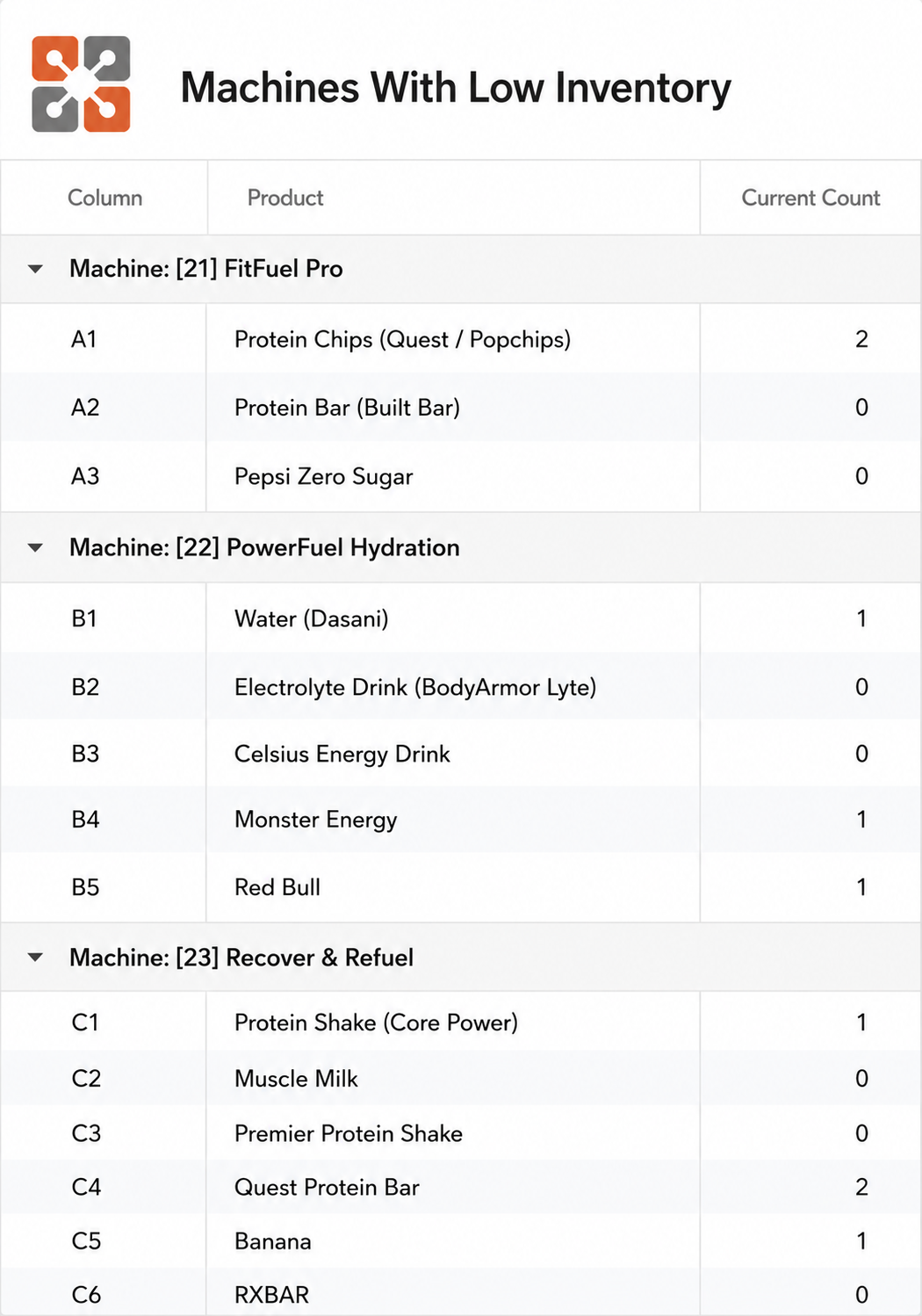
A machine that reads full at 2 p.m. can be empty by 6 — gym sales aren’t spread evenly through the day, they hit hard right before and after workouts. VendSoft flags exactly which slots are running low, on which machine, so you can restock ahead of the peak window instead of finding out you missed it. Start your free 14-day trial (no payment info required)
Product Mix, Healthy Snacks, and Machine Type for Gyms
The gym product mix is its own category, distinct from what works in an office or a school. If you’ve read our companion piece on vending machines in offices, you know that office mixes lean on perceived value — bulk snacks, a few healthier options mixed in — because office buyers are grazing out of habit, not urgency. School vending, by contrast, is built around affordability and compliance with smart snacks in school rules and USDA Smart Snacks guidelines, since the buyer is price-sensitive and the product list in school vending machines is often regulated. Those healthy vending options have to meet school standards and local nutrition standards, with limits on fat, sugar, sodium, and calories. Gym vending is neither of those. It’s a performance and recovery mix, and the buyer is willing to pay a premium for it because they’re solving an immediate physical need, not snacking out of boredom.
A gym vending lineup should center on:
- Protein bars — the anchor product in almost every gym machine. Look for bars with a legible ingredient list and reasonable sugar content; gym members are more label-literate than the average office buyer and will notice if your bars look like candy with a protein claim slapped on.
- Protein shakes and functional beverages — ready-to-drink protein shakes, collagen drinks, and functional beverages (think caffeine + electrolytes, or adaptogenic drinks) sell well immediately post-workout. This is where a protein vending machine setup — a refrigerated unit stocked specifically around protein and recovery drinks — tends to outperform a general snack machine in gym settings.
- Electrolyte drinks — sports drinks and electrolyte powders/tablets-in-bottle formats are a near-automatic sell after a hard session, especially in warmer climates or gyms without great water fountain access, while schools often lean toward low-sugar drinks like bottled water or milk.
- Healthy, performance-oriented snacks — in gyms, think jerky or nut mixes; in schools, granola bars and baked chips are more typical smart snacks choices.
On machine format: refrigeration matters a lot more here than it does in an office deployment. Shakes, functional beverages, and cold electrolyte drinks are a bigger share of gym revenue than they are in a typical office mix, so a vending machine for a fitness center should almost always include a refrigerated unit, not just an ambient snack machine. If you’re only placing one machine and budget is tight, prioritize refrigeration over machine size — a smaller cooled unit will usually outsell a larger dry-snack-only machine in a gym.
How to Pitch Gym Owners and Fitness Managers
The gym pitch is a different conversation than the office pitch, and treating it the same way is the most common mistake operators make when expanding into fitness locations.
Who you’re talking to. For an independent gym or a single CrossFit box, you’re almost always pitching the owner directly — they’re hands-on, they know their member base, and they’ll make a fast decision if they like the fit. For a chain (Planet Fitness franchise groups, regional fitness chains, multi-location studios), you’re more likely dealing with a regional facilities manager or operations lead, and the decision moves slower, often needs to fit an existing vendor approval process, and may need to be replicated across multiple sites before it’s worth their time to say yes to one.
What they actually care about. An office manager’s primary question is usually “will this be a hassle and will people like it.” A gym owner’s primary question is closer to “does this fit my brand and does it make the member experience better” — revenue share is often secondary to that, especially for independent owners who’ve built a specific identity around health and performance. If your product mix looks like a standard snack machine with a couple of protein bars thrown in, an owner who’s built their whole brand around clean nutrition will see through it immediately and say no. Come in with a mix that’s clearly built for a gym — protein, hydration, recovery — and lead with that, not with the commission split.
Co-branding and member-perk framing. This matters more in gyms than in almost any other location type. Framing the machine as a member amenity — “healthy fuel available on-site, no more stopping at a gas station on the way home” — lands better with gym owners than framing it as a revenue-share deal. Some owners will also want machine branding or product selection input to match their own gym’s identity (a functional-fitness box wants different products on the panel than a big-box 24-hour gym does). Being willing to customize the mix, even modestly, signals that you understand their business isn’t just foot traffic — it’s a brand.
Gyms are one of the stronger location types in the broader vending landscape precisely because the traffic pattern and purchase motivation are so specific — which also means they reward operators who actually tailor the mix and the pitch instead of copy-pasting an office playbook. For the full breakdown of how gyms stack up against offices, schools, hospitals, and other location types, see our complete Profitable Vending Machine Locations: 2026 Guide.
Want more vending business tips?
Subscribe to our free 2-week email course and learn how to start a successful vending business.