When evaluating vending machine profit margin, the key number is not gross sales alone but the percentage of gross revenue left after product costs, location commissions, servicing, card fees, and other operating expenses are deducted. For vending operators and business owners, that usually means focusing on net profit, with well-run machines often landing around 20% to 35%. In the vending machine business, a machine doing $1,500 a month in gross sales is not automatically better than one doing $900; you have to separate gross revenue from gross margin and net profit to judge performance accurately. That distinction matters when deciding which machines, locations, and routes are actually making money.
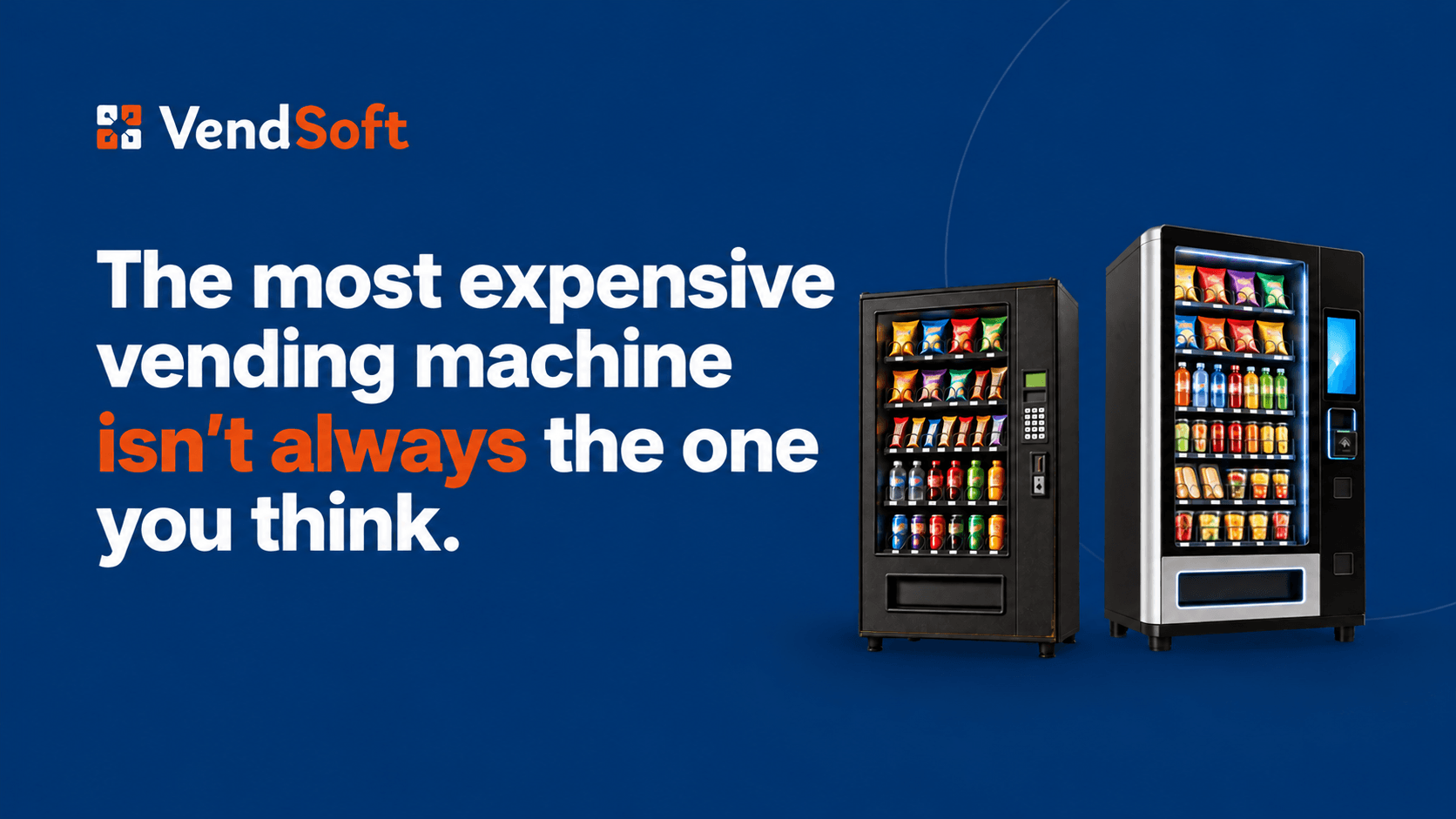
Consider two machines operating during the same month. High-traffic locations often lift vending machine sales, and a strong location can produce roughly $700 to $1,500 in monthly gross revenue, especially when the traffic is a captive audience or there are no nearby food options to compete for purchases. Machine A generates $900 in sales, while Machine B generates $1,500. Based on revenue alone, Machine B appears considerably more successful—it sells around 67% more. Once their costs are included, however, the result is very different.
Machine A | Machine B | |
|---|---|---|
Sales | $900 | $1,500 |
Product costs | $405 | $675 |
Location commission | $0 | $300 |
Service costs | $83 | $165 |
Total costs | $488 | $1,140 |
Profit | $412 | $360 |
Profit margin | 46% | 24% |
Machine A is left with $412 in profit, while Machine B earns $360. In other words, Machine B generates approximately 67% more sales but around 13% less profit. The difference isn’t caused by poor sales; it’s caused by what those sales cost to generate. Machine B has higher product costs, pays $300 in location commission—well within the common 10% to 25% range of gross sales—and costs twice as much to service. Machine A sells less, but a much larger share of its revenue remains as profit.
That is why this analysis looks at more than sales. Gross margin usually refers to sales minus product costs, and vending machines often run at roughly 50% to 70% gross margin, with gross profit margin commonly falling around 40% to 60%, while net margins reflect what remains after commissions, payment fees, travel, insurance, maintenance, and other operating costs, often leaving about 20% to 35% as net profit for a well-run machine. Technology adoption can also raise sales volume by accepting cashless payments. Cashless payment options can lift vending sales by 30% or more, and in some cases adding a credit card reader has increased sales by as much as 90%. The same machine can earn well in a strong site or lose money in a weak one because location quality changes both sales volume and the cost of producing those sales. Looking at profit alongside sales gives an operator a much clearer picture of which machines are actually contributing most to the business.
What should you include when calculating vending machine profitability and net profit?
The basic calculation is straightforward: take the revenue generated by a machine and subtract the costs associated with generating it. Product cost is usually the most obvious expense, but it isn’t the only one that matters: include wholesale cost and Cost of Goods Sold (COGS), which often account for 30% to 50% of revenue. If a location receives a commission, that directly reduces what remains from each dollar of sales. Servicing also has a cost, particularly when a machine is far from the rest of the route or needs to be visited frequently, and many machines need attention at least once per week because regular restocking prevents lost sales from empty slots. Cashless payment fees, often in the 2% to 4% range, expired or wasted products, repairs and other operating expenses can also affect the final result.
Not every operator will calculate these costs in exactly the same way, and not every expense needs to be allocated to an individual machine. The important thing is to be consistent enough that you can make meaningful comparisons between machines and locations. To measure vending profitability accurately, vending operators should track sales data, expected sales, cash collections, and operating expenses per machine. Product mix and pricing affect sales volume and machine profit, so comparisons should account for those differences between locations. If one machine produces $1,000 in sales with very little effort and another produces $1,300 but requires a high commission and twice as many service visits, comparing revenue alone hides information that matters when deciding where to invest your time and inventory. Better operational efficiency across multiple machines or an existing route can lower fuel and service costs and improve net profit.
Want a clearer picture of what each machine is actually earning? VendSoft helps you track sales, product costs, commissions, expenses, and profit by machine and location, so you can see which parts of your vending business are truly performing.Start your free 14-day trial today — no payment information required.
Want more vending business tips?
Subscribe to our free 2-week email course and learn how to start a successful vending business.