Choosing a business structure isn’t about paperwork for paperwork’s sake. It affects how exposed you are if something goes wrong, how you pay taxes, how easily you can grow, and how “serious” you look when you pitch locations, negotiate commissions, or apply for financing.
If you’re running (or starting) a vending route, the two most common starting points are sole proprietorship and LLC. Here’s how to think about each—plain language, operator perspective.
Start here: what changes when you pick a structure?
As a business owner in the vending machine industry, you deal with a few built-in risks and realities:
- You place equipment on someone else’s property.
- You handle cash and payment systems.
- You transport and store inventory.
- You deal with refrigeration, electricity, and public-facing equipment.
- You may hire drivers or contractors as you scale.
Choosing the right business structure matters because your legal structure affects how those risks land on you personally, and how easy it is to operate professionally.
Sole Proprietorship: simple, fast, and common for day one
What it is
A sole proprietorship is the default: you and the business are the same legal entity. If you start selling and don’t formally register a company, the short answer is that you’re usually operating as a sole proprietor (often with a local business license), which is common for a new vending machine business and many small business owners.
Why operators choose it
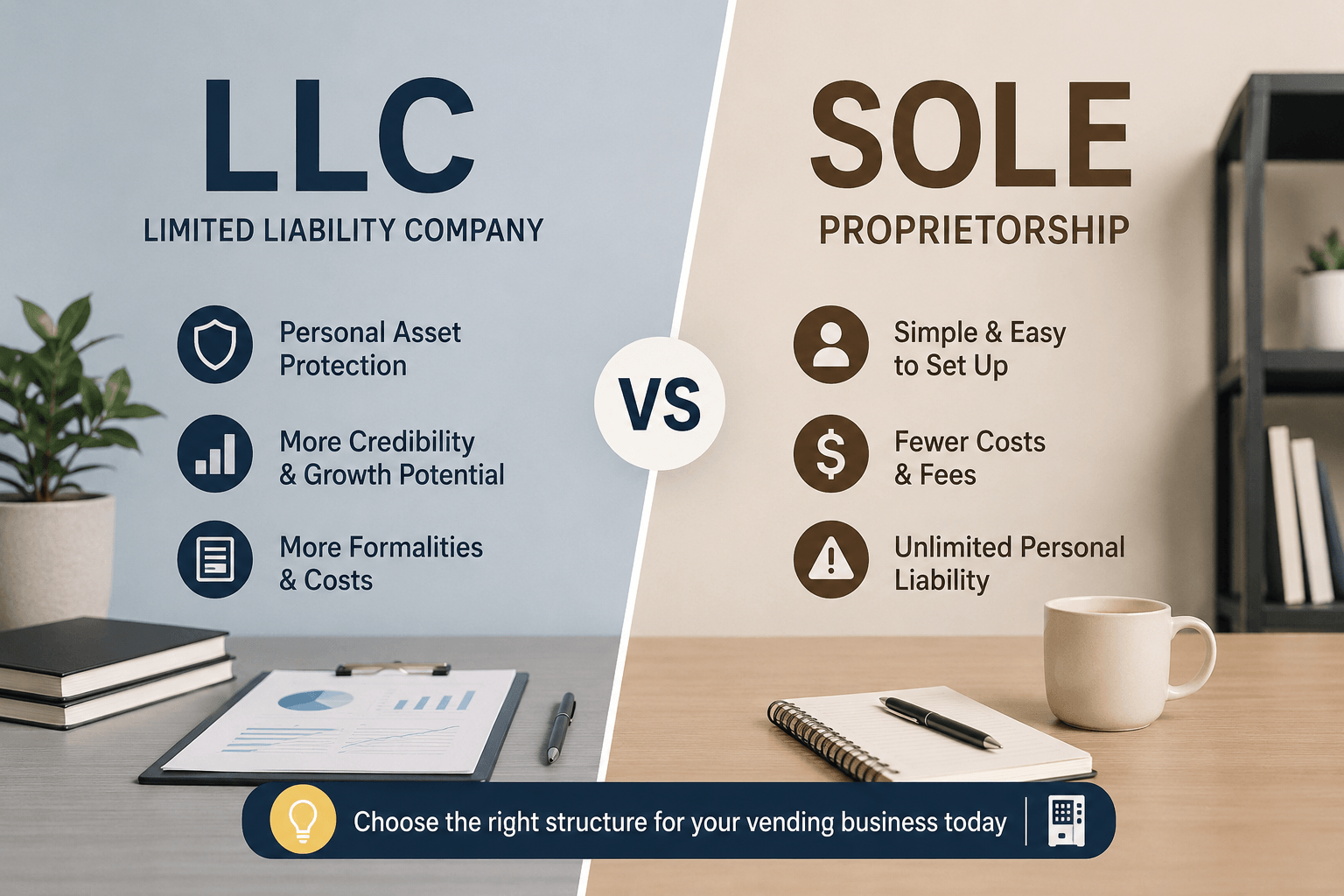
- Fast to start (less paperwork, lower upfront cost, and a straightforward process if you stay a sole proprietor on day one)
- Simple taxes (income typically flows straight to your personal tax return)
- Good for testing the waters with one or a few machines if you want to run a vending machine first and see whether it produces some passive income without overspending early
What to watch for
The big downside is exposure: if something goes wrong (damage, injury claim, contract dispute), there’s no legal separation between you and the business, so business liabilities can reach you personally if the business faces a claim or debt, making it harder to keep personal assets safe.
That doesn’t mean “don’t do it”—it means understand the tradeoff and manage risk with insurance and good practices, especially if you want to protect personal savings and avoid mixing your personal finances with business risk.
Who it fits best
- You’re starting very small (1–5 machines) and want to keep startup costs low
- You’re validating your ability to get locations and maintain a route in certain locations
- You don’t need financing yet
- You’re comfortable moving quickly and keeping overhead light
LLC: more protection, more structure, and easier growth
What it is
An LLC (Limited Liability Company) is a formal business entity created by forming an LLC, which establishes a formal legal structure for the business and creates a legal boundary between your business and your personal assets (assuming you operate it properly and keep finances separated), providing limited liability protection. This is why LLC formation is often the formal setup choice for a vending machine LLC or vending machine business LLC.
Why operators choose it
- Liability protection (the main reason): an LLC offers legal protection and limited liability protection.
- Easier to build professional credibility and enhanced credibility with:
- property managers
- corporate locations
- vendors and distributors
- financing and leasing companies
- Cleaner setup for business growth, especially for growing businesses:
- hiring helpers
- adding vehicles
- purchasing more machines
- tracking profit and cash flow properly
What to watch for
- More setup steps to meet legal requirements (registration, annual filings, filing fees, and ongoing state fees that vary by state governments)
- You must keep clean separation with dedicated bank accounts, clear records, consistent invoicing, and a real divide between personal and business finances
An LLC isn’t “set-and-forget.” You need basic discipline so the liability protection holds up, and an operating agreement may also be part of setup in some states or multi-owner LLCs.
Who it fits best
- You’re building a route you want to grow, especially if you plan to manage multiple machines and scale your vending operations
- You’re signing placement agreements regularly
- You’re bringing on partners, staff, or contractors, where a clearer ownership structure helps when more than one person is involved
- You want the credibility and protection as you expand
The vending-specific differences that matter most
1) Liability protection and exposure
Vending machines are physical equipment in public spaces. Liability can come from:
- machines tipping (rare, but serious)
- electrical issues
- refrigeration leaks or temperature problems (if vending food/drinks)
- slip hazards if a machine leaks or a customer drops something
An LLC helps separate business liabilities from your personal assets, which can help keep them safe if the business faces claims, but insurance is still essential regardless of structure.
2) Contracts and location deals
Many high traffic locations and other prime locations prefer working with a business entity. An LLC can make negotiations smoother and help you secure prime locations by adding professional credibility in formal site talks, especially when:
- commission agreements get more formal
- multiple locations are involved
- the site wants proof of insurance and a “real company”
3) Banking and bookkeeping
As soon as you operate more than a couple machines, you’ll want:
- a dedicated business bank account
- clear records for inventory purchases, commissions, fuel, and repairs
An LLC often pushes operators to get organized earlier, with clearer separation from personal finances through bank accounts—which helps protect profits.
4) Scaling and hiring
Even one part-time driver changes complexity. LLCs make it easier to:
- set up payroll or contractor payments
- separate business risk from personal life
- demonstrate business income cleanly if you want financing later
Taxes (high level, not legal advice)
This varies by country and state, but the general idea is:
- Sole proprietorship: simplest tax reporting, but everything is tied to you.
- LLC: can still be taxed in a simple way through pass through taxation, while offering more tax flexibility and potential tax advantages as you grow.
A good approach is to:
- Start simple if you’re testing,
- Move to LLC once you see consistent traction,
- Ask an accountant about the best tax setup as the business grows so you’re maximizing tax benefits and capturing available tax benefits.
A practical decision rule for vending operators
Choose sole proprietorship if:
- You’re just starting and testing your first machines
- You want minimal setup costs and quick momentum
- You’re comfortable upgrading later
Choose an LLC if it feels like the point where llc strikes a balance between simplicity and personal protection:
- You’re serious about growing beyond a few machines, and one of the biggest advantages is supporting long-term business growth without giving up that protection
- You’re placing machines in higher-traffic or more formal locations
- You want personal liability protection
- You plan to hire help or buy a route
Many operators start as sole proprietors and switch to LLC once they’ve proven the model.
Where tools like VendSoft fit (structure doesn’t change your need for systems)
Your business structure changes legal and tax setup—but your success still depends on daily execution:
- tracking sales and inventory
- planning trips and pick lists
- keeping cash collection clean
- running consistent reports by machine and location
Those operational habits, backed by a clear business plan as the strategic layer behind your systems, are what turn a vending side hustle into a scalable business by making vending operations easier to grow. If you’re ready to put those systems in place, you can start a VendSoft trial here: https://www.vendsoft.com/pricing/. (no payment info required).
Bottom line
Final thoughts
If you’re running a small route and testing the model, a sole proprietorship can be a reasonable starting point. If you’re building a real operation—signing agreements, placing more machines, handling larger cash flow—an LLC for a vending machine business can offer tax benefits, legal protection, and a stronger base for long-term growth.
Want more vending business tips?
Subscribe to our free 2-week email course and learn how to start a successful vending business.