Learn how to get a vending machine at no upfront cost—while avoiding common pitfalls and hidden catches.
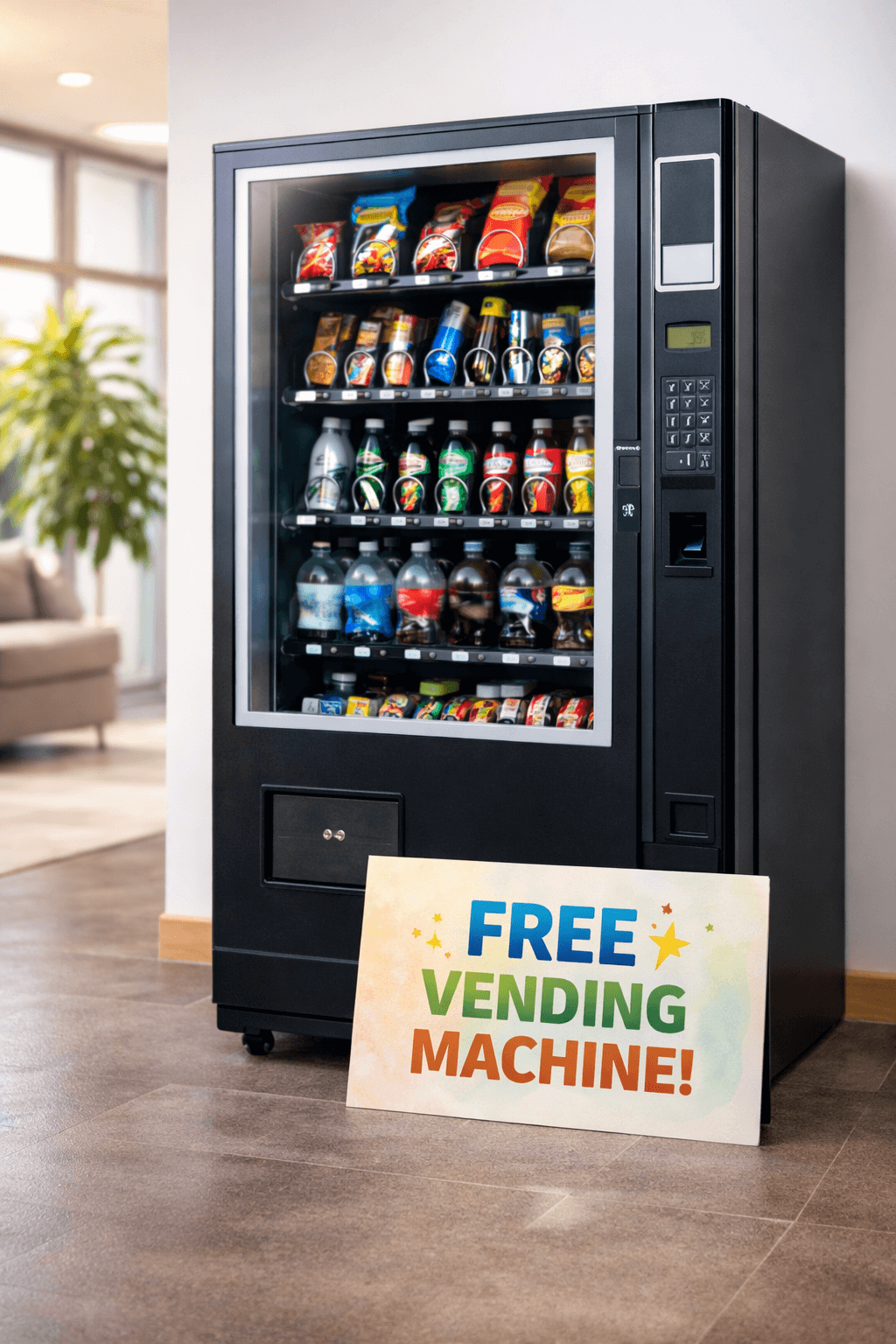
People say “free vending machine” and mean two different things:
- Free for the location: You place the machine, stock it, service it, and share a small commission. The site pays nothing.
- Free for you (the operator): A company, such as a bottler, distributor, or partner, provides the machine at no up-front cost in exchange for product exclusivity or revenue share.
Both can work. The trick is picking the right option for the right spot—and writing a simple agreement so there are no surprises. Here’s the human, no-fluff version of how to do it.
What “free” usually covers
- Covered: the machine itself, delivery, installation, sometimes repairs (depends on the deal).
- Not covered: product, cashless fees, routine service trips, refunds, and your time. Power is usually provided by the location.
Bottom line: “free” pays for itself only if the machine sells. So let’s set you up to sell.
Path A: Offer “free vending service” to a location
This is the classic play. The site gets convenience; you keep most of the revenue and pay a small commission.
Where it fits: Designed specifically for businesses, free vending machines are ideal for workplaces with over 40 employees, such as offices, gyms, warehouses, clinics, hotels, and auto centers—anywhere people work or wait.
How to pitch (talk like a person):
“We’ll place and maintain the machine at no cost to you. You pick a simple product mix (including healthier options), we restock weekly, and you get a clear monthly report plus a commission. Can we do a 60-day trial in the break area?”
Simple terms that keep everyone happy
- Commission: 5–15% of gross sales (or a flat monthly fee).
- Service: weekly or “as needed” when sales spike.
- Product requests: the site can choose a few favorites.
- Trial: 60–90 days; if sales don’t meet a basic target, you can move the machine—no hard feelings.
How VendSoft helps: add the location and machine, plan trips, generate picklists, and share Sales by Location each month. Clean, simple, professional.
Path B: Work with a beverage bottler or distributor
Sometimes a bottler will place a drink machine at no equipment cost if you sell their products exclusively.
Pros: newer gear, cashless readers, often remote monitoring.
Cons: product exclusivity and possible volume goals; less flexibility on pricing.
How to ask: bring headcount and hours, then say, “Do you have a no-cost placement program for this kind of site?” If yes, read the fine print before you sign.
Path C: Dealer placement or low-cost lease-to-own
Some equipment dealers will place a refurbished machine for a revenue share, or set up a small lease that feels “free” to the location.
Clarify in writing: who pays delivery, who handles repairs, what happens if you need to swap or remove the unit, and whether you can brand the cabinet.
Path D: Find a machine for free (or nearly)
This happens more than you’d think—an office closes, a school upgrades, a vendor retires. In most cases, free vending machines become available when businesses close, upgrade, or vendors retire.
Where to look: building managers, classifieds, business auctions, liquidation groups.
Quick inspection checklist: straight cabinet, tight door seal, clean glass, controller powers on, columns vend in a test, and (for chilled) the compressor actually cools.
A solid refurb can seed your first “free service” placement.
Types of products you can offer (and why it matters)
When it comes to vending machines, what you stock inside can make or break your results. The best operators know that a well-chosen product mix—snacks, drinks, and even fresh food—keeps people coming back and drives steady sales.
Beverage vending machines are a staple in offices, schools, hotels, and waiting rooms. Stock them with crowd-pleasers like Coke, Pepsi, Sprite, Gatorade, and juices, and you’ll cover most tastes. For locations that want healthier options, add water, low-calorie drinks, or unsweetened teas. Snack machines can be loaded with chips, cookies, granola bars, and trail mix, or you can go a step further and offer perishable items like sandwiches, salads, and fruit cups—perfect for busy offices or schools looking for a quick, fresh bite.
Don’t overlook accessibility. The Americans with Disabilities Act (ADA) sets standards to ensure vending equipment is usable by everyone. Machines designed with large buttons, clear screens, and audio instructions make it easy for all customers—including those with disabilities—to purchase snacks and drinks without hassle.
Offering a diverse selection isn’t just about variety—it’s about matching your inventory to the people at your location. A gym might want protein bars and electrolyte drinks, while a hotel lobby does better with sodas, juices, and chips. Technology makes it easy to keep your machines stocked and your products fresh, so you can quickly adjust your selection based on what sells.
Best of all, with the right setup, you can provide this service with no rental fees or hidden costs for the business. Competitive prices and a hassle-free experience make vending machines a perfect fit for high-traffic spots like offices, schools, hotels, and event spaces.
Bottom line: choose products that fit your audience, keep your prices fair, and make sure your machines are designed to handle everything from soda to perishable items. That’s how you provide real value—and keep your vending business running smoothly.
“Will this spot work?” A quick sanity check
- Weekly sales target: aim for $250–$400+ per machine. That usually covers product, card fees, service time, small repairs, and commission—and still leaves you margin.
- If traffic is light: try a small unit (countertop or slim fridge) and a lighter service schedule.
What locations care about (and how to answer)
Here are answers to the most common questions locations have about free vending machines:
- Cost: “Zero. You don’t buy a machine. We handle install and removal.”
- Hassles: “We restock and clean. If there’s an issue, here’s my direct number. We take care of all hassles so you don’t have to.”
- Choice & price: “You’ll have two value options on every shelf, plus some healthier picks.”
- Appearance: “Quiet equipment, neat cables, and a tidy area. We keep it that way.”
Small, calm promises you can keep beat big ones you can’t.
The agreement (one page, written in plain English)
- Who & how long: 60–90-day trial, then month-to-month or 1-year auto-renew with 30-day notice.
- Placement & power: the site provides a standard outlet and space; you handle install/removal.
- Service & response: your routine schedule + a response window (e.g., 24–48 hours).
- Products & pricing: you choose the mix, keep two lower-priced options, and adjust with sales.
- Commission: % of gross sales (or flat fee), payment date, and a monthly report.
- Monitoring & privacy: if you use remote monitoring, say so.
- Damage/theft: who’s responsible and what happens next.
- Under-performing sales: if weekly sales stay below an agreed amount, you can relocate the machine.
Attach a sample monthly report so they know exactly what they’ll receive.
Your pitch kit (copy, paste, and tweak)
Email opener
Subject: Free vending service for your [office/clinic/gym]
“Hi [Name], we place and maintain a vending machine at no cost to your site. You get a simple product mix, weekly restocking, a clear monthly report, and a commission. Could we stop by Thursday for a 10-minute walk-through?”
Walk-through checklist
Foot traffic by hour, exact spot and measurements (including door swing), outlet location, visibility, security/camera, who approves product choices and commission reports.
Leave-behind
A one-pager with your machine photo, price bands, service days, your phone number, the commission, and a screenshot of a sample report.
Running it smoothly with VendSoft
Using VendSoft streamlines your vending services, making it easy to manage installation, restocking, and ongoing support.
- Create tomorrow’s trip in the web app; add your stops.
- Download the trip to the mobile app, find the automatically generated pick lists for each machine, service the machines , then upload results—cash, refills, notes.
- If you use telemetry from supported providers, let those numbers flow in automatically.
This is how you keep “free” placements for years: reliable service and transparent reporting.
Red flags—press pause or renegotiate
- A sky-high commission with unproven traffic.
- No outlet or power you can rely on.
- Required brands you can’t source.
- Vague building access (you can’t service consistently).
- “Free snacks for staff” baked into the deal with no budget.
Walk away from money-losing placements. There will be better ones.
When evaluating potential placements for your free vending machine, always prioritize safety and ethical practices to avoid legal or operational risks.
A two-week plan to land one
With focused effort, you can secure a free vending machine placement in just two weeks.
Days 1–2: List 10 targets (offices, clinics, gyms, hotels).
Days 3–5: Send the email; call; book three walk-throughs.
Days 6–7: Do the walk-throughs; send a one-page proposal the same day.
Days 8–10: Agree on terms; set a start date; confirm power and placement.
Days 11–12: Install and stock; create the trip in VendSoft; set the service rhythm.
Days 13–14: Check early sales; adjust facings; note what to tweak next visit.
Repeat the cycle. One good “free” placement often leads to the next in the same building.
Bottom line
“Free” vending is real, but it isn’t magic. The machine is paid for by steady sales, clear agreements, and consistent service. Keep your promises small and solid, track results, and use tools like VendSoft to plan trips, load only what’s needed, and send clean reports. That’s how a free machine becomes a long-term, profitable account.
Want more vending business tips?
Subscribe to our free 2-week email course and learn how to start a successful vending business.